
Bamboozle
Service Design for a Sustainable Furniture Service
Addressing Global Warming Concerns Amidst the Cost of Living Crisis in the UK
Overview
This report presents a comprehensive research plan to encourage the adoption of sustainable furniture options among 20–45-year-old UK residents amid the cost-of-living crisis.
Initial surveys and competitor analysis identified a general lack of awareness, lack of trust, and affordability constraints as a hindrance to sustainable furniture adoption. After much exploration, sustainable rental furniture emerged as the most viable solution to encourage sustainability adoption.
The proposed concept is an innovative bamboo furniture rental platform focused on transparency, and quality assurance. Features include sustainability certifications, quality assurance badges, transparent rental contracts, and flexible lease terms. By providing clear product provenance and care guidelines, the service aims to build consumer trust in eco-friendly, high-quality rental furniture.
Potential impacts span environmental benefits through reduced waste and sustainable supply chains, enhanced affordability for sustainable options, and shifting mindsets from ownership to user-ship models. A role-playing prototype evaluation plan allows iterative user feedback for concept optimisation.
By addressing economic barriers, raising awareness, and offering innovative rental solutions, this project contributes valuable insights towards promoting responsible living while navigating financial constraints.
Introduction
To help solve an important challenge of how we might encourage lower ecological footprint lifestyle changes amid the cost-of-living crisis in the UK, an efficient toolbox comprising of research and design tools and methods were created, adapted, and iterated along the way. Having a process, mindset and a common language set prior optimized the impact of the selected tools and methods in terms of arriving at the concept of a sustainable rental and refurbishment service with a primary focus on transparency and quality from the initial gathered data proving bamboo as one of the best sustainable alternatives to other furniture materials. A practical approach to creation and improvement of the existing services was followed through the principles of service design – human centered, collaborative, iterative, sequential, real, and holistic.
This service design report is divided into sections about research plan, key findings, problem framing, solution or concept, prototype and evaluation done in detail. It is done with an aim to contribute to sustainable living practices in the UK, fostering responsible consumption habits amid a cost-of-living crisis.
Research plan
The research plan for this project includes an interplay of convergent and divergent- thinking and doing to identify and work towards solving the right problem (Appendix A -J). To offset different forms of research bias - researcher triangulation, method triangulation and data triangulation were implemented.
An exploratory study on how we might encourage 20–45-year-old UK residents to lower ecological footprint lifestyle changes amid the cost-of-living crisis led to secondary research about the sustainable furniture market in the UK. It led to further exploring people’s attitudes towards buying sustainable furniture and the factors influencing their decision in the current cost-of-living crisis through a survey and interview, analysed through quantitative and thematic analysis (Hollway and Jefferson, 2000). A competitor analysis followed to assess the strengths, weaknesses, and strategies of existing sustainable furniture services (Bensoussan, 2003). The findings from these methods were clearly defined into a report resulting in the framing of an initial problem statement from the 5 Why’s method to understand the root cause of the problem and 4 W’s method to make sure we have understood enough of it.
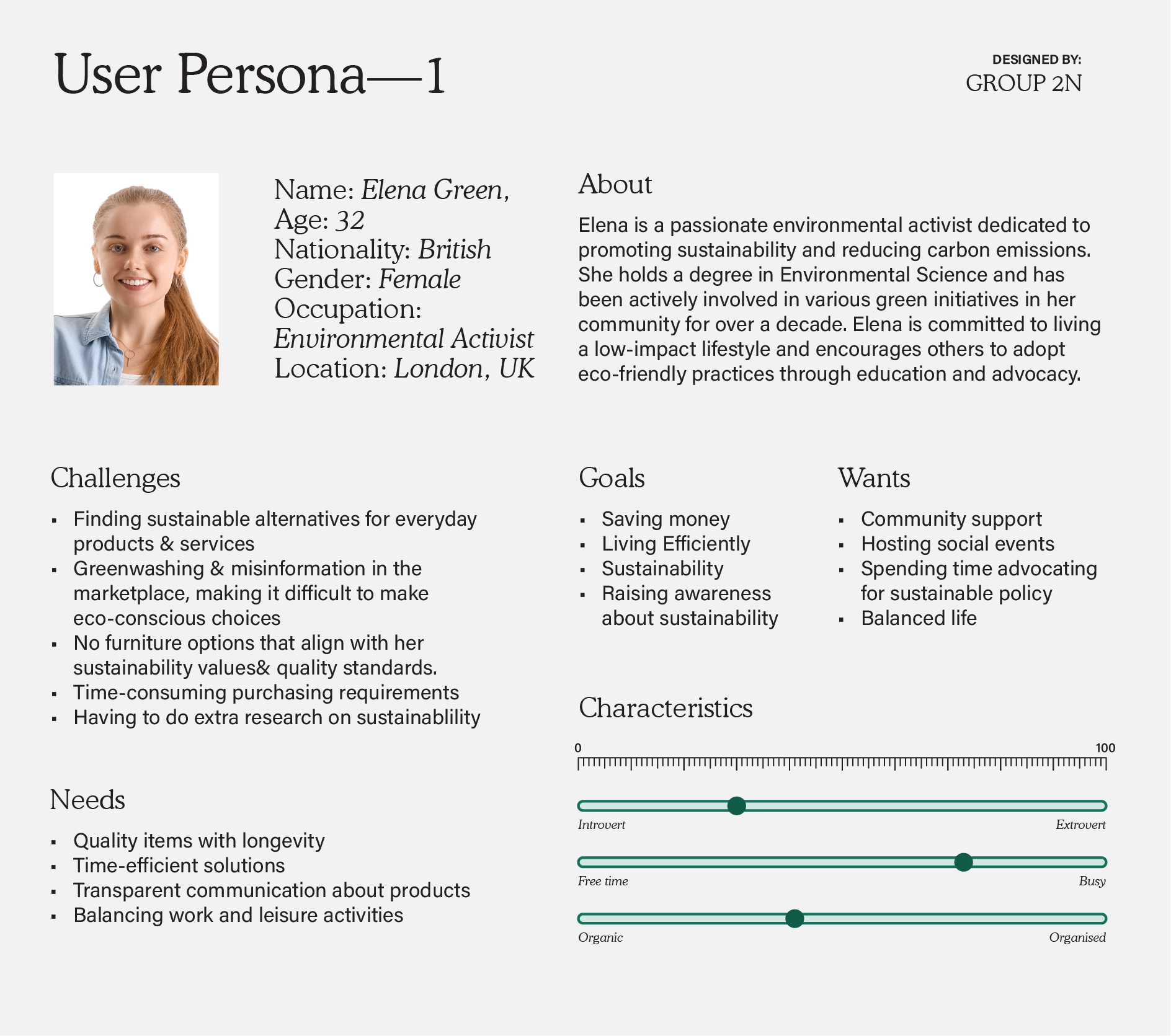
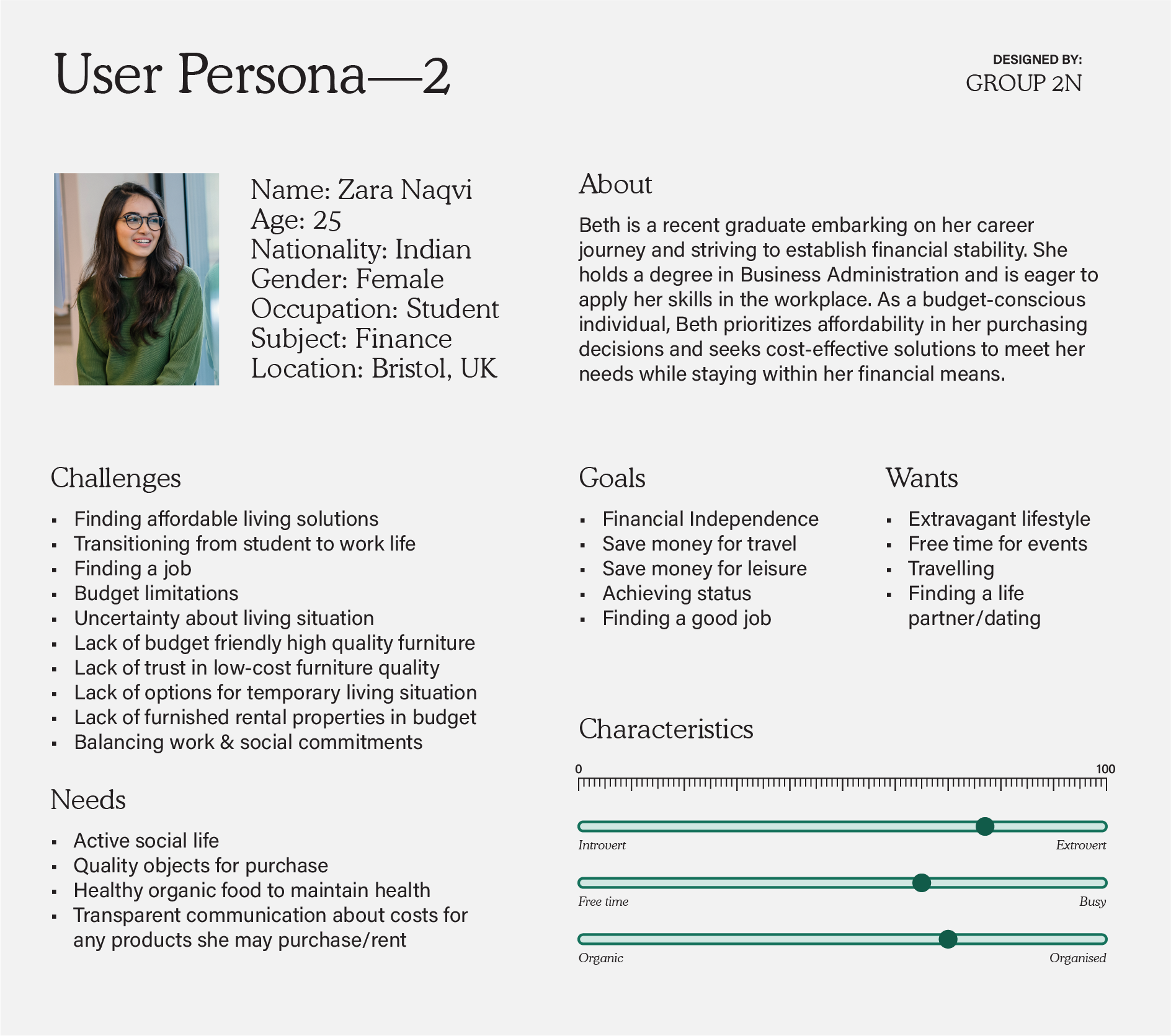
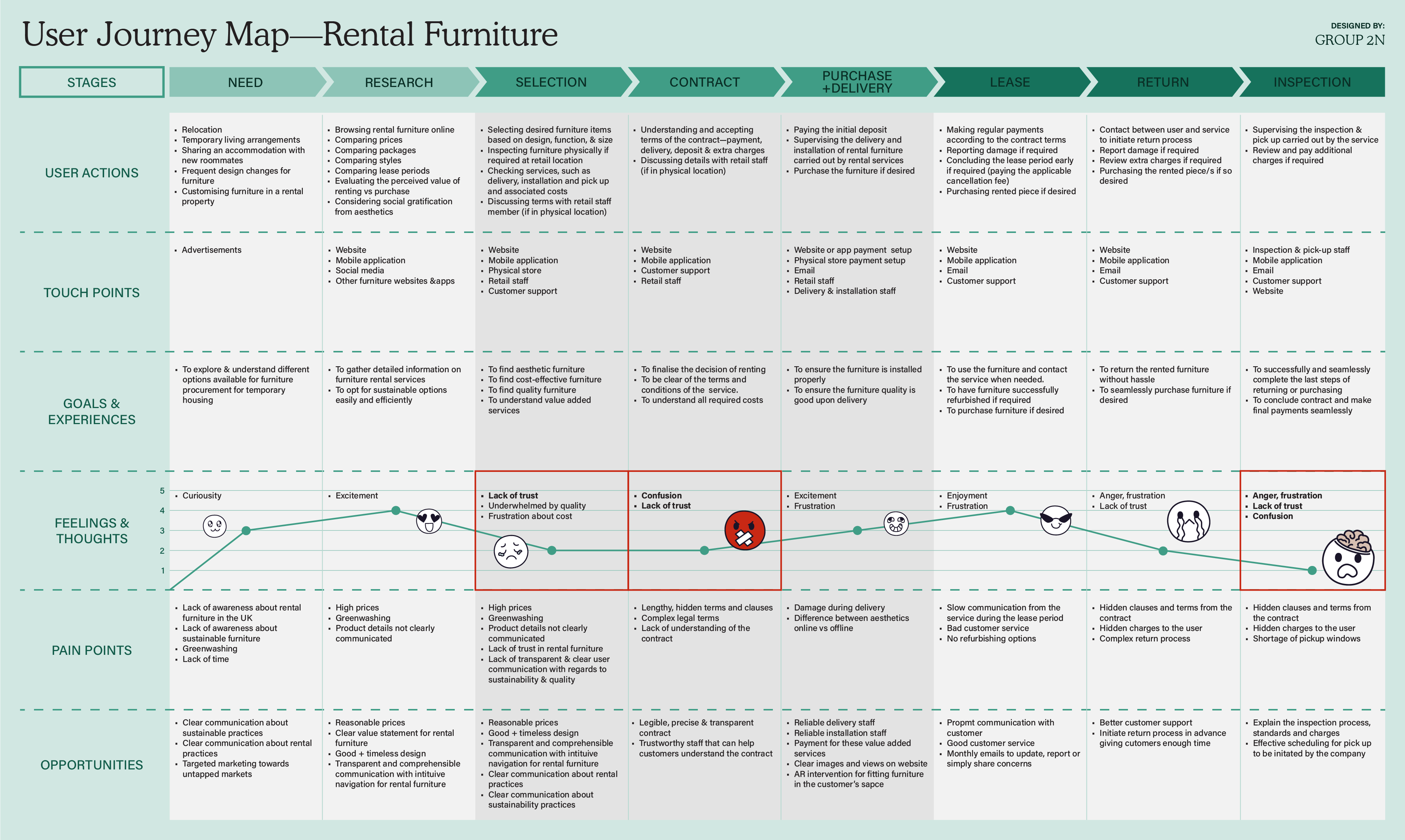
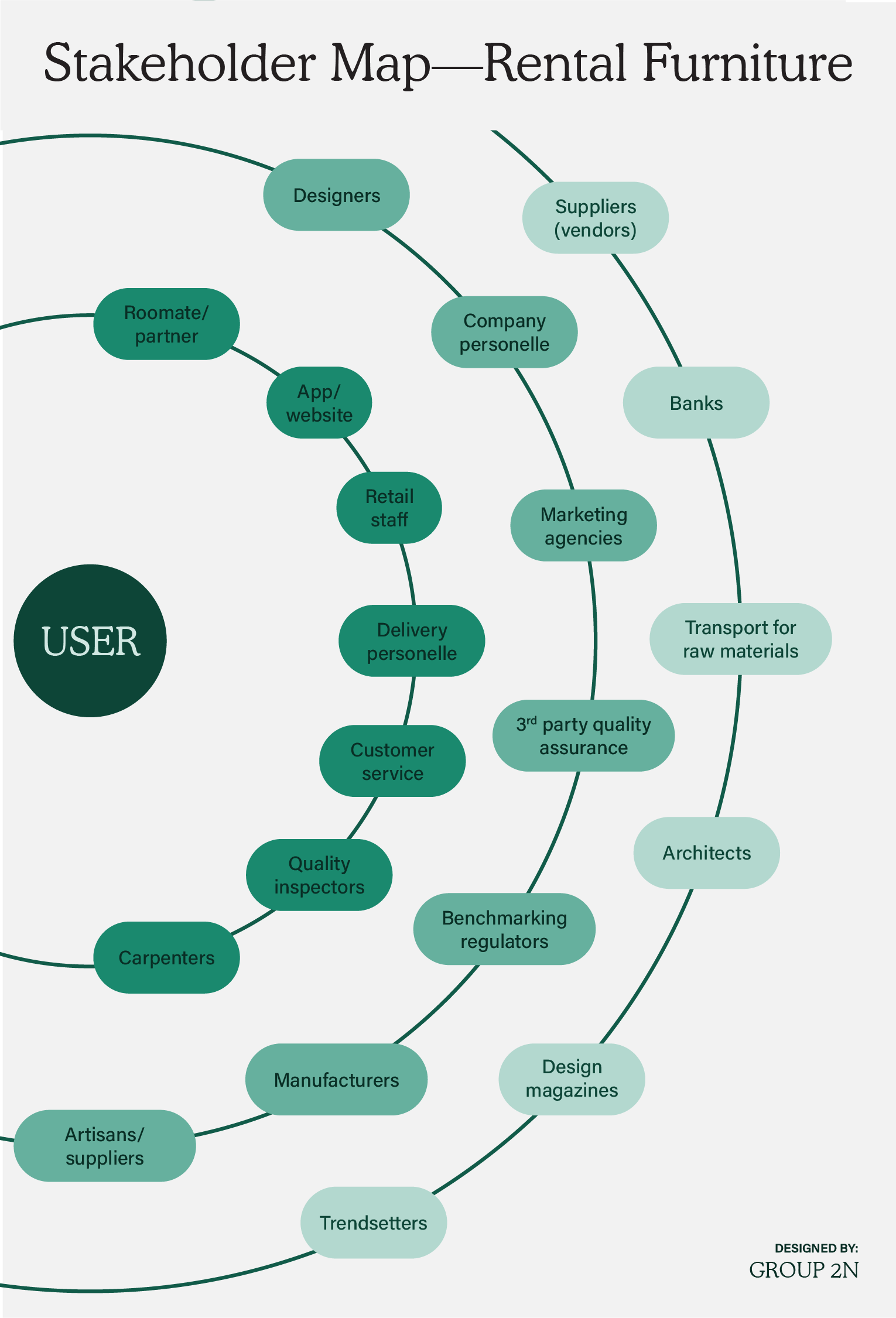
With earlier findings directing towards alternative affordable methods of adoption sustainable furniture other than buying, a literature review on rental furniture services and a survey was conducted to learn about people’s attitudes towards renting sustainable furniture as an eco-friendly, affordable alternative and was analyzed through quantitative and thematic analysis. Upon receiving positive responses to the concept of renting, a competitor analysis of the existing furniture rental services was conducted. Converging into the defining phase again, user needs and pain points were defined through user stories and personas (Miaskiewicz and Kozar, 2011). The current customer experience when interacting with a rental furniture service was visualised through a user journey map (Endmann and Keßner, 2016). Further, stakeholders within this ecosystem were visualised through a stakeholder map (Smith and Fischbacher-Smith, 2000). These definitions resulted in framing the problem statement by reusing the 5 Why’s and 4 W’s methods.
Key Findings & Problem Framing
For procuring key findings of design thinking, initially the double diamond method was favored. However, after a few findings it was quickly realised via iteration and adaptation that this study insisted on adding another diamond to the process.
There were various permutations and combinations of primary research, secondary research along with qualitative and quantitative research methods. These methods allowed the study to understand current demands of the audience for affordable sustainable furniture adoption alternatives.
In the initial stage, secondary research and primary research was conducted. This research led the study towards sustainable furniture. Furthermore, the research ventured various materials such as hemp, foam, recycled materials that could have been a better option, however, each of these products came with challenges such as import charges, freight charges or recycling processes that costed way more which defeated the purpose of finding an affordable option because of the current cost of living crisis. Additionally, furniture companies which priorities sustainable furniture were also considered, the drawback these companies carried were bereft products. These products were mainly less ‘à la mode’ or did not match any aesthetic for them to be chosen or used. Hence this study insisted on finding a solution that has none of the mentioned drawbacks, can be grown in the UK and provides variety and aesthetics. Therefore, “Sustainable Bamboo Furniture” seemed a quintessential option. To understand the current market, audience needs and various other factors, a self-administered questionnaire involving 34 participants was gathered along with a partly structured interview. These research methods were advocated so that the study can gather insights in mass. These mass inputs helped the study to understand the fashion of the current audience, current hurdles for sustainability faced by people and their perspective on sustainability. While analyzing the initial survey, it was understood that the audience has a pattern while buying furniture. First, they like to do extensive online research about the product they are willing to buy and once they have sufficient knowledge about their product, they choose to physically visit the store and experience the product. In addition to this, it was also found that people are interested in buying sustainable furniture but lack enough information or they have difficulties trusting the information that is there about the product. Consequently, following are the cavities that were determined from the initial survey and the interview.
- Lack of awareness/Information.
- Trusting the information.
- Affordable alternatives.
- Limited Availability.
- Variety.
After understanding the insights from the questionnaire and interview, and understanding the cause of the cavities, supported by the 5 WHY’s and 4 W’s method, an initial problem statement was drafted.
Initial Problem Statement
Despite the growing consumer and industry emphasis on environmental sustainability, there is a lack of awareness, cost effective options and adoption of sustainable furniture. Customers do not trust claims of sustainability and do not consider sustainability when thinking of furniture.
Along with the problem statement, an “Experience” as a concept and solution were penned with the focus of solving cavities derived from the initial research. However, upon performing heuristic research, it was summoned that this specific concept contradicts various factors such as affordability and the user journey.
Further, initial research findings also hinted a direction towards alternate adoption of sustainable furniture resulting in a second set of primary and secondary research. The findings from this research suggested that the audience was open to options other than ‘buying’ the furniture. Since the vast amount of these insights were from students, they suggested renting, thrifting, and using refurbished furniture. However, the biggest concern raised while renting, thrifting, and refurbishing of furniture was the quality of the furniture, along with durability and cost. This yielded various other workarounds. Hence, the concept was pivoted to a “Rental Concept.” This concept was further researched along with a competitor analysis. The competitor analysis helped the study by providing insights on how and what the current rental services offer, their revenue, business model and services they lack. This data aided in deciding the actual working of the current concept. Thus, a second and final problem statement was put down in place.
Problem Statement
The demand for temporary accommodation solutions and sustainable furniture rentals is hindered by a lack of trustworthy options. Consumers are skeptical about the sustainability and quality of existing rentals. They are also worried about the transparency of the contract process and hidden costs.
Concept
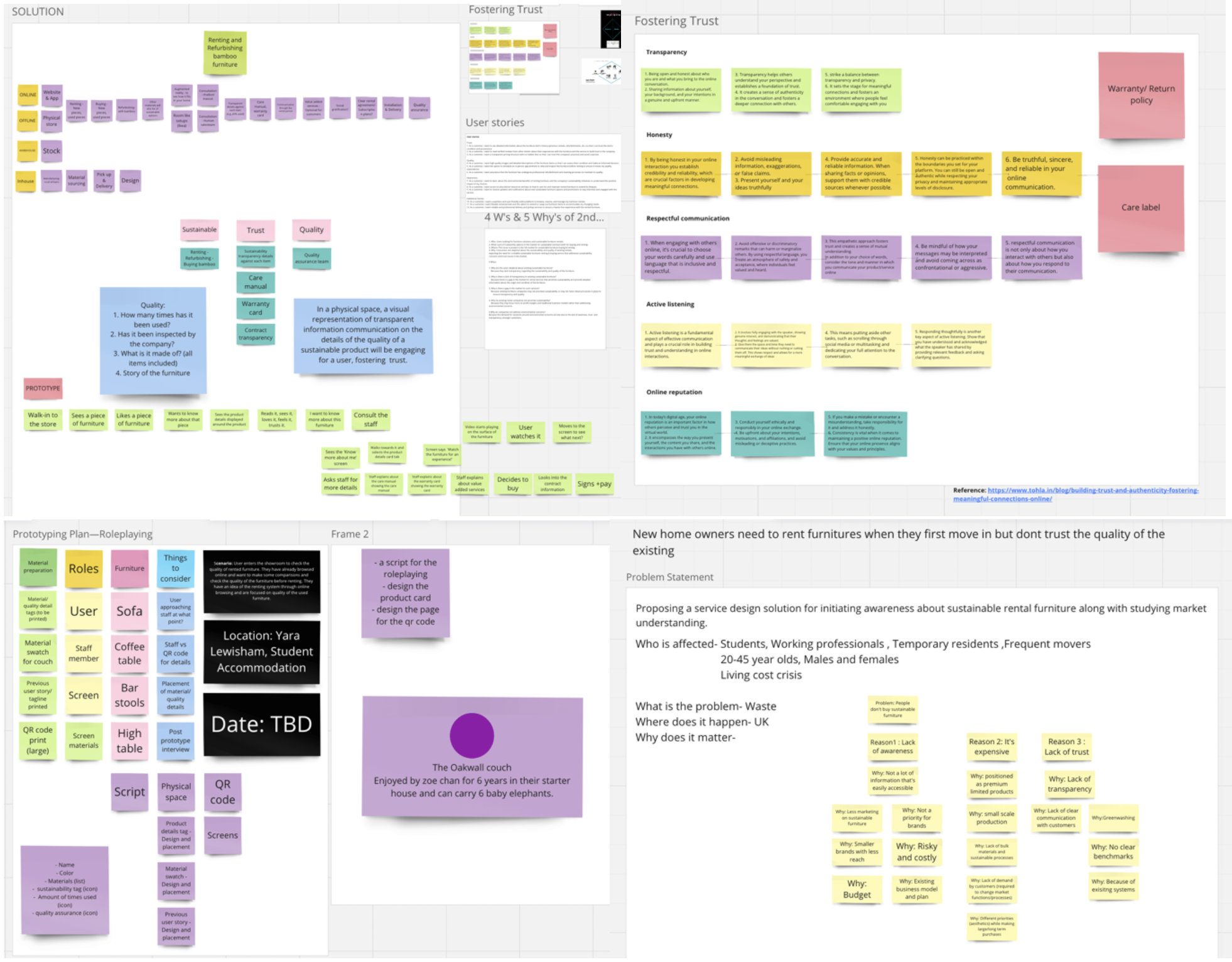
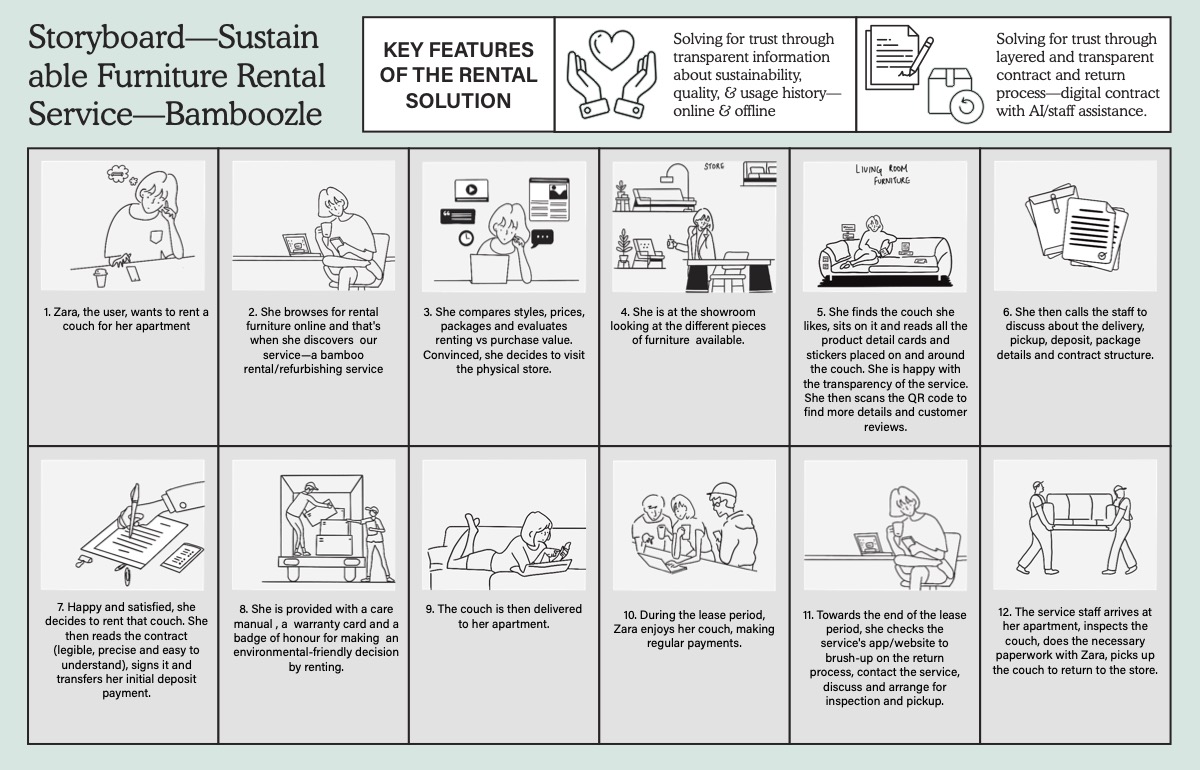
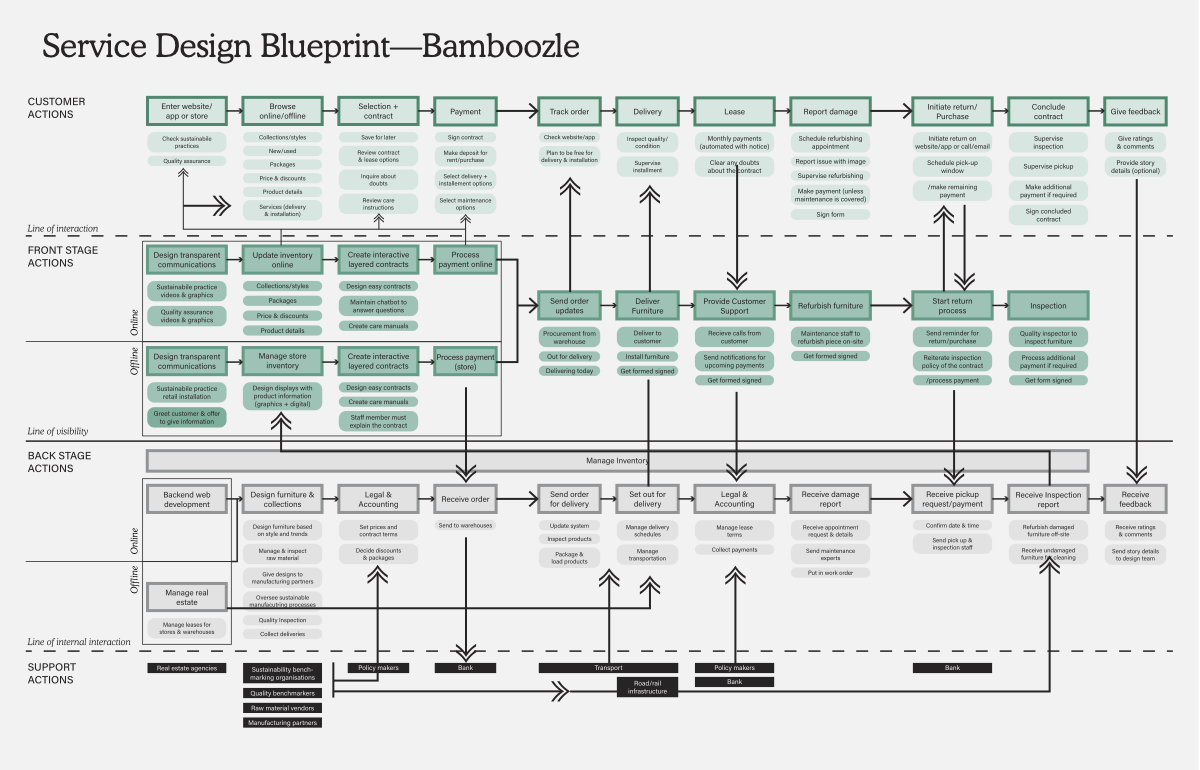
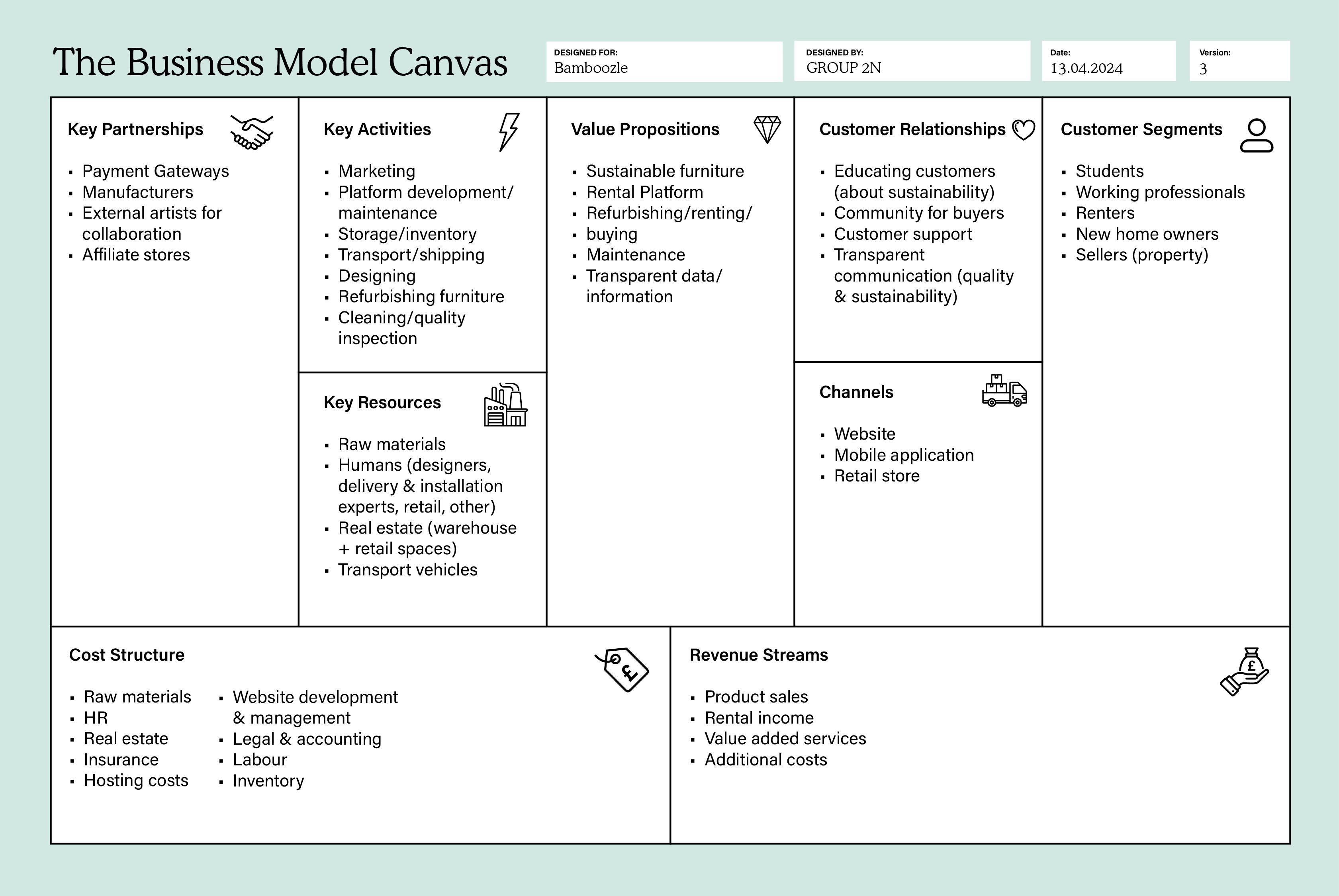
Diverging into the ideation phase, a brainstorming session was conducted to explore potential solutions to the problem statement. Exploring a narrative-driven approach to problem solving, the service concept was storyboarded. A service blueprint and a business model of such a service was then visualised to define the various touch-points within the service and to ensure alignment with the business objectives. (Appendix K -N) (Stickdorn et al., 2018)
These methods resulted in creating a concept of bamboo furniture renting and refurbishing online and offline service with a focus on fostering trust through transparent communication of information on sustainability and quality of its products.
It aims to do so through a few mediums - a user story tag to show how used the product is, a sustainability badge to prove its sustainability trail, quality and hygiene badge guaranteeing its inspection and durability by the quality team always meeting a set standard, and product detail tags (materials, dimensions, capacity, material swatches). Further, the customer will receive a care manual designed legibly and a warranty card (optional) at purchase. Most importantly, the rental contracts will be designed to be legible, precise, and transparent with no hidden clauses for a smooth process of renting and returning. Other key features of the service are as below.
Key features:
1. Affordable rental model:
The core of our concept is a rental based system that allows customers to access high quality sustainable furniture at a fraction of the cost of purchasing. By removing the upfront investment required for furniture ownership the rental model makes eco-friendly options more financially accessible especially for individuals and households facing economic constraints.
2. Furniture refurbishment and reuse:
Integral to our concept is a robust refurbishment and reuse program. Rather than discard used furniture, the rental service will undertake comprehensive refurbishment and restoration processes to extend the lifespan of each piece. This not only reduces waste and resource consumption but also gives new life to furniture, ensuring A continuous cycle of use and reuse.
3. Flexible rental terms:
Recognising the evolving needs of individuals and households, the rental service would provide flexible lease terms. Customers can rent furniture for short-term periods, such as temporary living situations or life transitions, as well as long-term arrangements for more permanent living spaces. This flexibility ensures that the service can adapt to the changing needs of the user.
4. Environmentally responsible supply chain:
The service also means a commitment to environmental responsibility throughout the entire supply chain. This includes sourcing materials from ethical and sustainable suppliers, implementing energy efficient manufacturing processes, and prioritizing the use of renewable, biodegradable, and recycled materials.
Impact:
1. Environmental impact:
- Promote the circular economy model by extending the lifespan of furniture through refurbishment and use.
- Reduces waste and resource consumption associated with the traditional “take-make-waste” model of furniture consumption.
- Encourages a shift towards more sustainable materials sourcing and manufacturing processes.
2. Social impact :
- Enhances accessibility and affordability of eco-friendly furniture options especially for individuals and households facing financial constraints.
- Empowers consumers to make more sustainable choices without compromising their budgets.
- Raises awareness and shifts attitudes towards sustainable living practices.
3. Behavioural impact:
- Encourages a shift in consumer mindset from ownership to access and user-ship.
- Normalises the concept of renting and sharing resources rather than individual ownership.
- Fosters a more sustainable and responsible approach to furniture consumption.
Prototype & Evaluation Plan
The earlier mentioned solutions to address the problem statement were integrated into various aspects of the service. These solutions were then grouped into different projects and prioritised through a decision matrix to prototype. As it had to be an evaluative, contextual prototype for an experience, a role-playing prototype was conducted to gather evidence on the below hypothesis (Stickdorn et al., 2018).
Hesitant users will be able to gain trust in the quality of rented and used furniture by providing transparent information communicated visually through various mediums such as environmental graphics, certification tags, digital information, and staff in a physical space.
1. Planning
Scope and process: In the user journey of renting a piece of furniture, when a customer is in the physical store to see the options available and learn about its details, this service will provide transparent, visually communicated information through user story tags to show how used the product is, a sustainability badge to prove its sustainability trail, quality and hygiene badge guaranteeing it’s inspection and durability by the quality team always meeting a set standard, and product detail tags that includes materials, dimensions, capacity and material swatches. Users would interact with these mediums by picking them up and reading them aloud or processing them in their mind. These transparent pieces of information were designed to foster trust considering visual design principles to catch the attention of the customer on the vital details and be easy enough to understand quickly. They can further scan the QR code provided, to get detailed information on the app of the service. They would also have the option to interact with the staff during any point of their visit to the store.
Stage: The prototype was conducted during the day, in a set environment representing a rental furniture store, majorly with a couch, coffee table and all the necessary tags and product details placed at different visually - grasping spots within the staging area.
Props: A couch and pillows, coffee table, user story tags, sustainability badges, quality and hygiene badge, product detail tags, QR code and phone.
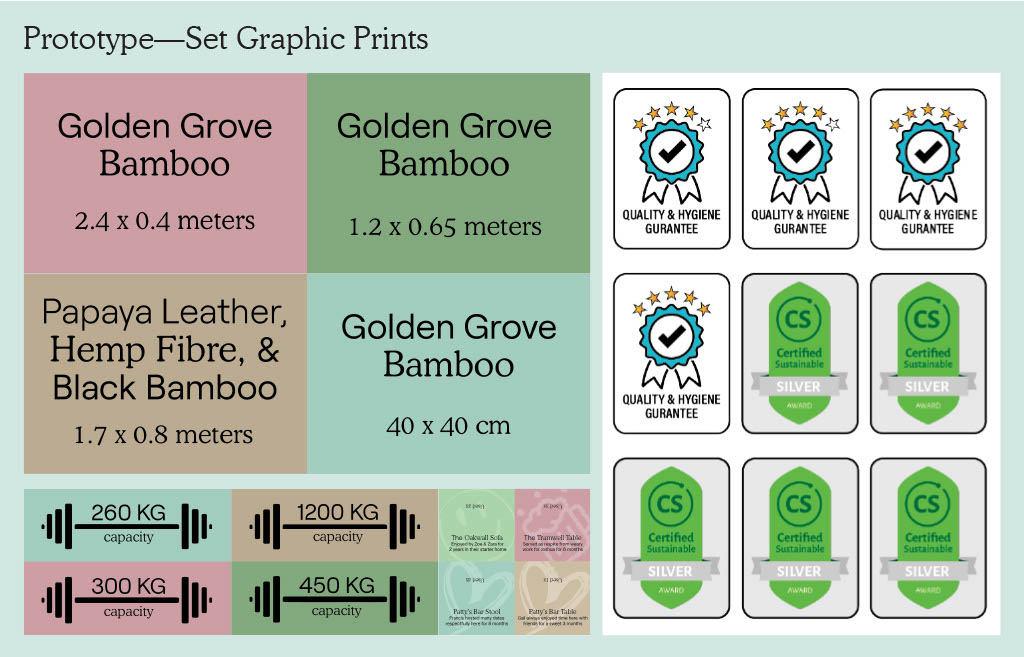
Actors and roles in the team: The current prototype was conducted within the team with one facilitator and researcher, one staff member and two customers representing students doing their masters in London visiting a rental furniture store to potentially rent furniture for their shared apartment, interested in sustainable living but skeptical about the quality of rented furniture.
When replicated with users who are UK residents between the age of 20–45-year-olds recruited through the contact information and consent provided during the earlier conducted surveys and interviews, there will be two facilitators and researchers, one staff member and six customers role playing one at a time to evaluate effectively.
2. Running the prototyping sessions
The script for the role-playing session was prepared keeping the goal of the process in mind. Further, the stage was set up, and customers were briefed on the entire process before the session began. Role-playing was conducted and recorded through a video camera, notes taken by the researcher and concluded with an interview (Appendix O) to learn about the participant’s experience and gather evidence on the hypothesis. The same will be replicated with the recruited 6 participants.
Biases: By assuring participants of their confidentiality, by minimising researcher’s interference during the sessions and having more than one researcher as observer encouraging diverse viewpoints, researcher biases such as confirmation bias, observer via and Hawthorne effect will be mitigated. By clearly defining guidelines and using a standardised set of instructions and processes, participant bias such as experimenter expectancy effect and actor-observer bias will be mitigated.
3. Data analysis
The collected data through video recording, interview and notes taken during the session will go through data cleaning and management process by conducting consistency checks and standardisation of data. Notes and interview data will be analyzed through thematic analysis and cross checked with the video footage (Stickdorn et al., 2018).
Conclusion
In conclusion, a comprehensive research plan addressed the challenge of encouraging lower ecological footprint lifestyle changes amid the cost-of-living crisis in the UK and gained valuable insights into consumer attitudes and behaviors. Extensive exploration into the sustainable furniture market and rental sustainable furniture market identified some of the major gaps as lack of awareness and lack of trust amongst consumers, and lack of affordable alternatives, limited availability, and lack of variety in the market. Addressing these gaps, a concept of a sustainable rental and refurbishment furniture service with a major focus on transparency, affordability and quality assurance was proposed. Further, a prototype and evaluation plan were created to test and refine the service concept. Feedback from the participant involvement of the prototyping sessions will help iterate and optimise the solution to meet the evolving needs of consumers and contribute to sustainable living practices in the UK.
Bibliography
Bensoussan, B. (2003) ‘Strategic and Competitive Analysis: Methods and Techniques for Analyzing Business Competition’. Available at:https://www.academia.edu/15110402/Strategic_and_Competitive_Analysis_Methods_and_Techniques_for_Analyzing_Business_Competition(Accessed: 21 April 2024).
Endmann, A. and Keßner, D. (2016) ‘User Journey Mapping – A Method in User Experience Design’, i-com, 15(1), pp. 105–110. Available at: https://doi.org/10.1515/icom-2016-0010.
Hollway, W. and Jefferson, T. (2000) Doing Qualitative Research Differently: Free Association, Narrative and the Interview Method. SAGE.
Miaskiewicz, T. and Kozar, K.A. (2011) ‘Personas and user-centered design: How can personas benefit product design processes?’, Design Studies, 32(5), pp. 417–430. Available at: https://doi.org/10.1016/j.destud.2011.03.003.
Pal Kapoor, A. and Vij, M. (2021) ‘Want it, Rent it: Exploring Attributes Leading to Conversion for Online Furniture Rental Platforms’, Journal of theoretical and applied electronic commerce research, 16(2), pp. 212–231. Available at: https://doi.org/10.4067/S0718-18762021000200114.
Smith, A. and Fischbacher-Smith, M. (2000) ‘Stakeholder involvement in the new service design process’, Journal of Financial Services Marketing, 5. Available at: https://doi.org/10.1057/palgrave.fsm.4770003.
Stickdorn, M. et al. (2018) This Is Service Design Doing. O’Reilly Media, Inc.
Appendices
Appendix A
Survey Analysis (1st)
Data for this particular study was gathered through a self-administered questionnaire involving a sample of 34 participants ranging from ages 20 to 45 (i.e., GenZ, millennials) residing in the UK. The questionnaire assimilated of following sections:
- Demographics
- Furniture purchasing behavior.
- Attitude towards sustainability.
- Preferences and practices regarding furniture.
- Cost of living crisis.
Participants from this age demographic were preferred for the following reasons.
- This specific age group seems to tend more towards sustainability.
- Both Genz and millennials are believed to be most receptive when it comes to environmental issues.
- These age groups are more likely to be interested in purchasing sustainable material.
- Lastly, they also fall into the category of who will be investing in furniture in anon.
The data collected from the survey implies that out of 34 responses, 44.1% ranged from ages 20-24, 32.4% from 25-29, 17.6% from 30-34 and 5.9% from 40-45. The maximum percentage of these responses were students and working professionals hence, most of them are living in student accommodation and rented apartments.
Further, the furniture purchasing behaviour was ascertained that the maximum number of populations i.e., 57.6% have not purchased furniture. But around 88.2% stated that they will be buying furniture soon. When asked to rank the factors in order of importance, Aesthetics, Price, and Brand made it to the podium, sustainability ranked 4th overall.
Along with this information, it was perceived that all the responses suggested that they have almost no knowledge about how, what, and where to look for sustainable material. These responses also suggested that the sustainable furniture they had come across was either not suitable for their choice or aesthetic of their home. Consequently, after a few more questions about the manner of the purchase and decision-making process, it was corroborated that preponderance of responses urged they shortlist the pieces online and then visit the store to experience the shortlisted furniture and finally the decision is made. Also, an interesting insight from the survey response was gathered, which suggested people above 40 did not have sustainability as their priority.
Collectively, it was understood that people are willing to buy sustainable furniture but choose to renounce it because of the following limitations.
- Limited availability
- Options
- Scarce awareness.
- Cost
Appendix B
Interview Analysis
The interviews focused on the furniture purchasing behaviors and sustainability perspectives of participants aged 20 to 45 in the UK. Participants provided insights into their preferences and considerations during furniture acquisitions based on the below-mentioned factors as:
- The kind of furniture they buy
- How they buy furniture
- Factors they consider when buying furniture
- Awareness about sustainability, attitude towards sustainability,
- Access to information on sustainability
- Problems they face when buying furniture
- Attitude towards collapsible furniture
- Attitude online 3d view of furniture
- Solutions they think will make furniture buying easier
Introduction- The insights were gathered from four interviews conducted to explore attitudes and behaviours regarding sustainable furniture purchases among individuals aged 20 to 45 in the UK. The interviews aimed to understand the kinds of furniture purchased, how individuals buy furniture, factors influencing purchasing decisions, awareness about sustainability, attitudes towards sustainability, access to information on sustainability, challenges faced during furniture purchases, attitudes towards collapsible furniture and online 3D views, and solutions proposed to simplify furniture buying.
Findings- The participants exhibit varying preferences and behaviours regarding furniture purchases. While some prioritize aesthetic appeal over functionality, others emphasise both. Both online and offline purchasing channels are used, with offline shopping preferred for its tactile experience. Quality and aesthetics emerge as crucial factors influencing purchasing decisions, with sustainability playing a minor role for most participants.
Awareness and Attitude Towards Sustainability- Participants demonstrate varying levels of awareness about sustainability, with some expressing skepticism towards labels claiming sustainability due to perceived marketing motives. Access to reliable information on sustainability poses a challenge, contributing to uncertainty among participants. While sustainability is considered, it often takes a backseat to other considerations such as quality, aesthetics, and brand reputation.
Challenges Faced During Furniture Purchases- Participants encounter difficulties in accessing information about sustainable goods and express frustration with the lack of transparency in the market. The selection process is time-consuming, looking for a desire for quicker and more personalised assistance from sales staff. Assembly and service options also influence purchasing decisions, highlighting the importance of after-sales support.
Attitude Towards Collapsible Furniture and Online 3D Views- Views on collapsible furniture vary based on living environments, with space-saving benefits weighed against other factors like quality and aesthetics. While participants find the idea of online 3D views helpful for certain items, they still value the tactile experience of physically examining furniture before purchase.
Proposed Solutions- Participants suggest improvements in information accessibility and transparency regarding sustainable furniture. Personalised assistance and streamlined decision-making processes are considered essential for enhancing the furniture-buying experience. Online features like 3D views are welcomed but not seen as a substitute for physical examination. They also showed interest towards affordable adoption alternatives of sustainable furniture.
Conclusion- The findings highlight the complex interplay of factors influencing furniture purchasing decisions among individuals aged 20 to 45 in the UK. While sustainability holds some importance, it competes with considerations of quality, aesthetics, and convenience. Addressing challenges related to information access, decision-making processes, and after-sales support could enable more informed and sustainable furniture purchases in the future.
Appendix C
Competitor analysis (1st)
1. Furniture village
Furniture Village is a British furniture store. It has more than fifty shops throughout the UK, the initial of which was opened in Abingdon, and sells online. The business is headquartered in Slough. It is the largest independently had furnishings chain in the United Kingdom.
Furniture Village offers great value furniture for the lounge, bedroom, dining room and kitchen with stores across the UK and a wide range available online.
2. DFS
DFS Furniture plc is a furniture retailer in the United Kingdom, Spain and Ireland and they in sofas and soft furnishings. The sofas are handmade, independently quality tested, and guaranteed for 15 years.
3. JYSK
JYSK is a global retail chain that markets ‘everything for the home.’ Today the JYSK Group makes up more than 2,800 shops in 52 nations worldwide. The team’s annual turnover is 3.79 billion euros. Development is steady and controlled, and the total staff includes around 24,000 employees.
4. SCS
They offer a wide choice of fabric sofas and leather sofas, and work with some of the UK’s favorite sofa brands such as La-Z-Boy, G Plan, SiSi Italia, Celebrity and Endurance to bring customers sofa ranges that cannot be found elsewhere on the high street. They have 101 stores across the UK from as far north as Aberdeen to Plymouth.
Sustainable furniture companies
1. Ikea (Cheap)
Ikea is a global home furnishing brand that brings affordability, design, and comfort to people all over the world. They have 21 stores around the UK and are in operation both online and offline. They have a wide range of sustainable products including bamboo, cotton, plastic, metal, wool, etc.
They charge from 3 pounds to 800 pounds for bamboo furnitures depending on the size and quality.
IKEA introduced a new quality standard for presenting products. It is artful, tasteful, and interactive. The moment you see (and sit on, or bounce on) something you like, you can have it. It feels yours as soon as you have laid your eyes on it. Getting your new sofa in your home and installing it is no hassle. Then you can spend the evening testing it with a good book and hot cocoa.
2. Sebastian Cox Furniture (Really expensive and Bougie)
They are a contemporary British furniture maker focused on sustainable design and using locally sourced materials like coppiced woodlands and waste streams. Coppiced willow and hazel wood: They source willow and hazel from coppiced woodlands in the UK.
Waste wood streams: Sebastian Cox repurposes various waste wood streams like off cuts from timber yards, recycled packaging wood, and other waste sources that would otherwise end up in landfills or incinerators.
They also utilise other woods like ash, sycamore, and oak that are sustainably and locally sourced from British woodlands and forests.
They have an e-commerce website (sebastiancox.co.uk) where customers can browse and purchase their furniture pieces and homeware items and a showroom and workshop located in Hackney, London where customers can view the products in person and meet with the designers.
3. Nkuku (moderately expensive)
Nkuku uses sustainably sourced and natural products to create their product lines. These materials include the likes of rattan, corn husk and jute. They also have bamboo furnitures as well.
4. Oragi (Very Expensive)
Oragi is a handmade furniture making company that has positioned itself well in the sustainable bamboo furniture niche, with a focus on contemporary designs and ethical sourcing. Their online and offline presence allows customers to experience their products.
Appendix D
Initial problem statement
4 Ws:
Who:
- Target audience: Consumers, both individual and business, who are looking to purchase furniture
- Stakeholders: Furniture manufacturers, retailers, sustainable furniture advocates, and policymakers
What:
- The problem: People are unaware about the availability and benefits of sustainable furniture options
- The desired outcome: Increased awareness and adoption of sustainable furniture among consumers
Where:
- The issue is prevalent across different geographical regions, both in developed and developing countries
- The lack of awareness and availability of sustainable furniture can be observed in various retail and online channels
Why:
- Lack of information and education about sustainable furniture options
- Limited market visibility and availability of sustainable furniture
- Manufacturers and retailers prioritizing profit over sustainability
- Lack of consumer demand and awareness about the importance of sustainable furniture
5 Why's:
1. Why are people unaware about sustainable furniture options?
- Lack of information and education about sustainable furniture.
2. Why is there a lack of information and education about sustainable furniture?
- Insufficient marketing and awareness campaigns by sustainable furniture brands and retailers.
3. Why are there insufficient marketing and awareness campaigns?
- Sustainable furniture brands may have limited resources and budgets compared to traditional furniture companies.
4. Why do sustainable furniture brands have limited resources and budgets?
- The sustainable furniture market is still relatively niche and smaller compared to the mainstream furniture industry.
5. Why is the sustainable furniture market still relatively niche and smaller?
- Consumers may not be aware of the benefits of sustainable furniture or may perceive it as more expensive or less accessible.
Appendix E
Survey Analysis (2nd)
Another survey was Data for this study gathered through a self-administered questionnaire involving a sample of 30 participants ranging from ages 18 to 54 in the UK. The questionnaire assimilated of following sections:
- Demographics
- Furniture renting behavior.
- Attitude towards sustainability.
- Preferences and practices regarding renting
Participants from this age demographic were preferred for the following reasons.
- This specific age group seems to tend more towards sustainability.
- These age groups are more likely to be interested in purchasing sustainable material.
- Lastly, they also fall into the category of who will be investing in furniture in anon.
This survey was prepared to get insights on people’s behavior on renting or buying refurbished furniture. The questionnaire consisted of questions that will help researchers understand and determine a solution that incorporates both ecological health and human vitality towards sustainability.
The demographics for this questionnaire were 63% responses between 25-34, 23% between 18-24 and 13% between 35-44. Majority of this population were students and working professionals living in student accommodation and Rented apartments out of which approximately 47% of the responses chose “somewhat likely” as their answer to the question “How likely are you to consider renting furniture?”. These responses further divided and chose types of furniture they would be interested in renting. 36.6% being living room furniture, 23% being bedroom furniture and the rest were divided equally between home office furniture, outdoor furniture, and other kinds.
Comparing to the insights from previous survey where the trend about buying furniture was mentioned, where people would do their research online and later visit the store to experience the furniture. The trend in this survey suggests, maximum number of people would rent the furniture online and will not choose to experience prior renting. The biggest concern mentioned was the quality of the rented furniture, durability, and cost.
Overall, the responses suggested that many people are interested in renting furniture from small pieces to beds and sofas, however, there are a few concerns regarding quality, durability, and cost.
Appendix F
Competitor Analysis (2nd)
Pepperfry operates on a Managed Marketplace Business Model, enabling small and medium businesses, artisans, and merchants to highlight and sell their products through the platform. The process involves Pepperfry's category team liaising with sellers, selecting products, and arranging for photoshoots in studios. Once catalogued, these products are listed on the website for sale. Upon purchase, products are sourced from sellers to Pepperfry's warehouse for quality checks, packaging, and dispatch to customers. In 2014, Pepperfry expanded its operations by introducing retail stores called Pepperfry Studios alongside its online presence.
RentMojo operates on an asset-light model, a cornerstone of its success. Rather than maintaining extensive inventory, the company collaborates with manufacturers, vendors, and individual asset owners to source products such as furniture, appliances, and electronics for monthly rental by customers. This approach minimizes upfront costs and facilitates rapid scalability.
1. Furniture and Fixtures Rentals: RentMojo generates a significant portion of its revenue by offering a wide range of home essentials for lease, including sofas, tables, beds, and more.
2. Customer Subleasing Assets: In a unique approach, RentMojo permits customers to sublease the assets they rent, creating an additional revenue stream for both parties.
3. Value-added Services: The company provides value-added services such as delivery, installation, maintenance, and buyback options, each accompanied by an additional fee.
Rental Options and Furniture Selection
The market offers a variety of rental options and furniture options tailored to different preferences and budgets. Rental prices vary from GBP 180 for basic setups to premium tiers. Furnished accommodations typically command higher rates due to convenience and amenities.
Motivations for Furnished Rentals
Tenants opt for furnished rentals for convenience, style options, and sustainability. Other motivations include transitional life stages, event-based requirements, and the desire to avoid furniture commitment.
Retail Innovations and Trends
Retail giants like John Lewis, Ikea, and Muji have entered the rental space, catering to shifting consumer preferences. This reflects a broader trend towards subscription-based consumption models.
Design Strategy and Pricing Dynamics
Providers prioritise timeless design over trends, offering diverse materials and styles. Pricing is based on lease duration, furniture condition, and bundled offerings, incentivising comprehensive furnishing solutions.
Transition to Ownership
Many tenants consider post-rental furniture purchase options. Providers often facilitate this transition, allowing tenants to acquire favoured pieces, thus blending rental and ownership models.
Appendix G
User personas
Appendix H
User Journey map
Appendix I
Stakeholder map
Appendix J
Problem statement (2nd)
4 Ws
Who:
- Users looking for furniture solutions and sustainable furniture rentals.
What:
- Lack of trustworthy options in the market for sustainable furniture both for buying and renting.
Where:
- This issue is present in the UK market for sustainable furniture buying & renting.
Why:
- Consumers are skeptical about the sustainability and quality of existing rentals,expecting the need for a reliable sustainable furniture renting & buying service that addresses sustainability concerns and trust issues in the market.
5 Why's
1. Why are the users skeptical about existing sustainable furniture?
- Because they lack transparency regarding the sustainability and quality of the furniture.
2. Why is there a lack of transparency in existing sustainable furniture?
- Because there is a gap in the market for rental services that prioritise sustainability and provide detailed information about the origin and condition of the furniture.
3. Why is there a gap in the market for such services?
- Because existing furniture companies may not prioritize sustainability or may not have robust processes in place to ensure transparency and quality.
4. Why do existing rental companies not prioritize sustainability?
- Because they may focus more on profit margins and traditional business models rather than addressing environmental concerns.
5. Why do companies not address environmental concerns?
- Because the demand for solutions around environmental concerns are low due to the lack of awareness, trust, and transparency amongst customers.
Appendix K
Brainstorming
Appendix L
Storyboarding
Appendix M
Service Design Blueprint
Appendix N
Business model canvas
Appendix O
Interview questions
1. What are your concerns about the quality of rented furniture?
2. Did the visuals and details provided about the furniture help with those concerns?
3. What aspect of this experience was the most effective in building trust about the quality and the information provided to you?
4. Do you feel confident enough to rent that piece of furniture?
5. How did this experience affect your decision of renting from this service?
6. What other details would you have liked to see highlighted?
7. Is there anything else that could have been done to meet your needs?